Emergency Roof Repair in Central City, New Orleans
Dense nineteenth-century shotguns and doubles either side of Oretha Castle Haley Boulevard. Long narrow roofs, party-wall proximity, and a lot of housing stock older than the covering on it.
- Shotgun and double stock
- Long, narrow roof planes
- Oretha Castle Haley corridor
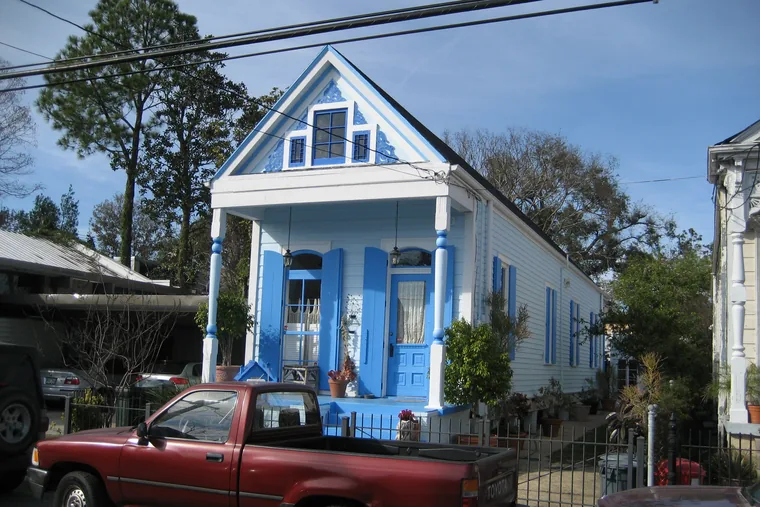
Central City building stock, and what it means for a roof
Central City is one of the densest nineteenth-century neighborhoods in New Orleans — block after block of single and double shotguns, camelbacks and corner storehouses, built from the 1870s onward for working families and still overwhelmingly that stock today. Oretha Castle Haley Boulevard runs through the middle of it.
A shotgun roof is a long, narrow plane, usually a simple gable, which makes it one of the more straightforward roofs in the city to work on. The complications are age and budget history: many of these roofs have been repaired repeatedly and cheaply, sometimes with three-tab shingle laid straight over whatever was there, and the deck below has been carrying that for a long time.
Why Central City roofs fail the way they do
Three things we see repeatedly on this stock — not a generic list, and not the same three as the next neighborhood over.
Stacked cheap repairs
Layer over layer without tear-off is the most common history here. It adds weight and hides the deck’s real condition.
Camelback transitions
Where a camelback’s rear second story meets the single-story front, that step is a recurring leak point.
Ridge and edge uplift
Long simple gables catch wind along the ridge. Uplift starts at the ridge or the rake and works inward.
Do this while you wait for us
Five things that limit the damage. None of them involve going onto the roof — in a storm, in the dark, on a wet New Orleans roof, that is how people get hurt.
- Move what matters out of the way. Electronics, documents, anything soft. Water spreads along a ceiling far wider than the visible drip.
- Put a container under it and a towel in the container. The towel stops the splash-back that spreads the damage sideways.
- If the ceiling is bulging, pierce it deliberately. A small hole at the low point drains it into your bucket. A bulging ceiling that lets go on its own takes the whole sheet with it.
- Kill power to the affected area at the board if water is anywhere near a light fitting, a fan or a socket.
- Photograph everything before you clean up. Time-stamped photos of the water while it is still coming in are worth a great deal in a Louisiana claim.
When we cover
Hurricane season runs June through November and does not respect a schedule. Overnight, weekends and holidays are covered. During a named storm we do not put crews on roofs while it is still blowing — nobody credible does — but we take the call, log you, and we are moving as soon as it is survivable.
An honest word about tarping
A tarp is a stop-gap, not a repair. Fitted properly it buys weeks and stops the inside getting worse; it does not fix anything and it should never be sold to you as though it does. We tarp to make a building safe and dry, then come back in daylight and diagnose the roof properly.
The season, and what it asks of a roof
Gulf Coast roof failure is a wind story, not a hail story. The damage that matters is uplift — seals broken, edges lifted, water driven under what is left.
The window for finding lifted edges, tired flashing and loose ridge caps while there is still time to fix them calmly and at a normal price.
Peak season. Demand spikes, good crews book out, and the roofs that get attention first are the ones already on somebody’s list.
Nobody credible puts a crew on a roof while it is still blowing. We take the call, log the address, and move the moment conditions allow.
Make safe, dry in, document for the claim, then diagnose properly in daylight. In that order, and not all in one visit.
Four stages, no surprises
Call
A person answers and logs the address, the situation and whether anyone is at risk. Any hour, through the season.
Make safe
Power risk, ceiling risk and occupancy dealt with first. The building is made safe before the roof is touched.
Dry in
The opening closed properly so nothing more gets in tonight — honestly labeled as a stop-gap, not a repair.
Diagnose in daylight
We come back and find out what actually failed, then quote the real repair in writing.
Working around Oretha Castle Haley Boulevard, Dryades Street, A.L. Davis Park and the surrounding streets. If your address is in Central City, it is in the service area — there is no travel surcharge anywhere inside Orleans Parish.
Emergency Roof Repair near Central City
Everything else we do in Central City
Emergency Roof Repair in Central City — straight answers
Do you actually answer at night during storm season?
Yes. Hurricane season runs June through November and does not keep office hours. A person takes the call, logs the address and the situation, and tells you honestly when a crew can be with you.
Will you come out during the storm itself?
Not while it is still blowing. Nobody credible puts a crew on a roof in those conditions, and any contractor who promises otherwise is either lying or dangerous. We take the call, log you, and move as soon as it is survivable.
Is a tarp a repair?
No, and we will not sell it to you as one. A properly fitted tarp stops the inside getting worse and buys you weeks. The actual repair gets diagnosed in daylight and quoted separately, in writing.
I have had the same leak patched three times — why does it keep coming back?
Because the patch is almost certainly not where the water is entering. On a long shotgun roof water can travel a considerable distance along the deck before it shows on a ceiling, so patching directly above the stain treats the symptom. We trace to the actual entry point first and will tell you honestly if the answer is that the covering has reached the end of its life rather than needing a fourth patch.
Emergency Roof Repair in Central City?
Call and we will get someone on the roof, then put what we find in writing.