Emergency Roof Repair in Holy Cross, New Orleans
The Lower Ninth’s riverfront section on the natural levee — higher ground that largely escaped the worst of 2005. Genuinely old Creole cottages and shotguns inside a designated historic district.
- Holy Cross Historic District
- Natural-levee high ground
- Nineteenth-century cottage stock
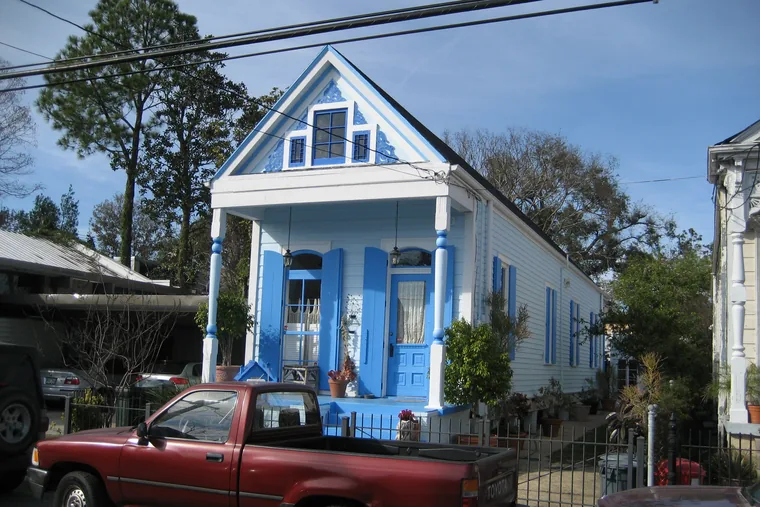
Holy Cross building stock, and what it means for a roof
Holy Cross occupies the riverfront strip of the Lower Ninth Ward, sitting on the natural levee and therefore on markedly higher ground than the blocks behind it. That elevation is why a substantial amount of genuinely old building stock survived 2005 here when so little did further back, and why the neighborhood is a designated historic district.
The surviving houses are nineteenth-century Creole cottages, shotguns and a scattering of larger center-hall houses, many with their original framing intact. They are old, they are significant, and a good number of them have had only intermittent maintenance for decades — which makes honest assessment more valuable here than a fast quote.
Why Holy Cross roofs fail the way they do
Three things we see repeatedly on this stock — not a generic list, and not the same three as the next neighborhood over.
Long-deferred maintenance
Decades of intermittent upkeep on nineteenth-century stock means small failures have usually become deck failures by the time we are called.
River wind exposure
The levee position that kept these houses dry also puts them in the wind off the river, and ridges lift accordingly.
Original fabric under later covering
Modern shingle laid over original wood shingle or plank is common here and changes how a repair has to be approached.
Do this while you wait for us
Five things that limit the damage. None of them involve going onto the roof — in a storm, in the dark, on a wet New Orleans roof, that is how people get hurt.
- Move what matters out of the way. Electronics, documents, anything soft. Water spreads along a ceiling far wider than the visible drip.
- Put a container under it and a towel in the container. The towel stops the splash-back that spreads the damage sideways.
- If the ceiling is bulging, pierce it deliberately. A small hole at the low point drains it into your bucket. A bulging ceiling that lets go on its own takes the whole sheet with it.
- Kill power to the affected area at the board if water is anywhere near a light fitting, a fan or a socket.
- Photograph everything before you clean up. Time-stamped photos of the water while it is still coming in are worth a great deal in a Louisiana claim.
When we cover
Hurricane season runs June through November and does not respect a schedule. Overnight, weekends and holidays are covered. During a named storm we do not put crews on roofs while it is still blowing — nobody credible does — but we take the call, log you, and we are moving as soon as it is survivable.
An honest word about tarping
A tarp is a stop-gap, not a repair. Fitted properly it buys weeks and stops the inside getting worse; it does not fix anything and it should never be sold to you as though it does. We tarp to make a building safe and dry, then come back in daylight and diagnose the roof properly.
The season, and what it asks of a roof
Gulf Coast roof failure is a wind story, not a hail story. The damage that matters is uplift — seals broken, edges lifted, water driven under what is left.
The window for finding lifted edges, tired flashing and loose ridge caps while there is still time to fix them calmly and at a normal price.
Peak season. Demand spikes, good crews book out, and the roofs that get attention first are the ones already on somebody’s list.
Nobody credible puts a crew on a roof while it is still blowing. We take the call, log the address, and move the moment conditions allow.
Make safe, dry in, document for the claim, then diagnose properly in daylight. In that order, and not all in one visit.
Four stages, no surprises
Call
A person answers and logs the address, the situation and whether anyone is at risk. Any hour, through the season.
Make safe
Power risk, ceiling risk and occupancy dealt with first. The building is made safe before the roof is touched.
Dry in
The opening closed properly so nothing more gets in tonight — honestly labeled as a stop-gap, not a repair.
Diagnose in daylight
We come back and find out what actually failed, then quote the real repair in writing.
Working around Holy Cross Historic District, Mississippi River levee, St. Claude Avenue Bridge and the surrounding streets. If your address is in Holy Cross, it is in the service area — there is no travel surcharge anywhere inside Orleans Parish.
Emergency Roof Repair near Holy Cross
Everything else we do in Holy Cross
Emergency Roof Repair in Holy Cross — straight answers
Do you actually answer at night during storm season?
Yes. Hurricane season runs June through November and does not keep office hours. A person takes the call, logs the address and the situation, and tells you honestly when a crew can be with you.
Will you come out during the storm itself?
Not while it is still blowing. Nobody credible puts a crew on a roof in those conditions, and any contractor who promises otherwise is either lying or dangerous. We take the call, log you, and move as soon as it is survivable.
Is a tarp a repair?
No, and we will not sell it to you as one. A properly fitted tarp stops the inside getting worse and buys you weeks. The actual repair gets diagnosed in daylight and quoted separately, in writing.
My house survived Katrina — does that mean the roof is sound?
It means the house was on high enough ground, which is not the same thing. Surviving the flood says nothing about twenty further years of sun, rain and wind on the covering above it. On Holy Cross stock we most often find original structure in decent condition under a covering that is long past its service life, which is a good position to be in but still one that needs acting on.
Emergency Roof Repair in Holy Cross?
Call and we will get someone on the roof, then put what we find in writing.