Roof Repair in St. Roch, New Orleans
Nineteenth-century shotguns and Creole cottages around St. Roch Avenue and the Campo Santo. Modest, well-built stock, much of it now well past the life of its last roof covering.
- Shotgun and Creole cottage stock
- St. Roch Market and Campo Santo
- Aging coverings, sound framing
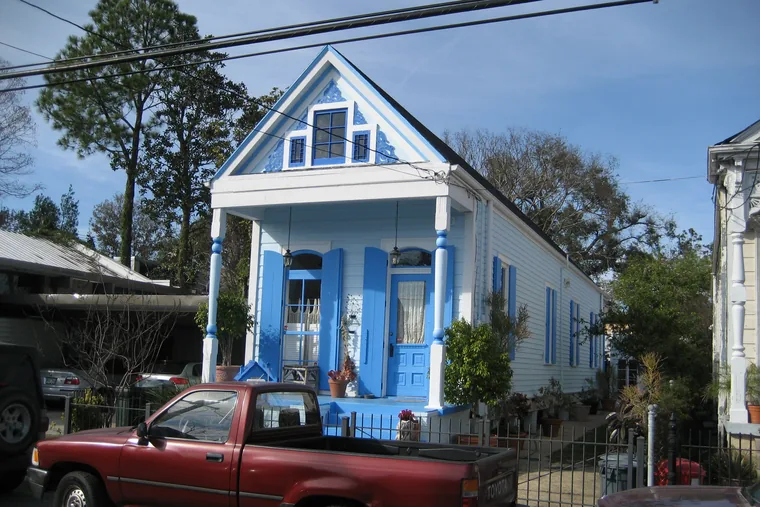
St. Roch building stock, and what it means for a roof
St. Roch grew around the St. Roch Chapel and its Campo Santo cemetery, filling in through the later nineteenth century with shotguns, doubles and Creole cottages built for working households. The framing on this stock is generally cypress and generally sound; it is the coverings that have had a harder life.
A great many roofs here are on their last covering cycle — three-tab shingle laid fifteen or twenty years ago, now well into granule loss, with the algae streaking that this climate produces on any aging asphalt roof. The honest conversation in St. Roch is usually about timing a replacement rather than finding a repair, and about what can reasonably be deferred.
Why St. Roch roofs fail the way they do
Three things we see repeatedly on this stock — not a generic list, and not the same three as the next neighborhood over.
End-of-life granule loss
Three-tab shingle in this climate loses its granules and goes brittle. Once that starts, patching buys months, not years.
Algae streaking
The black streaking on these roofs is algae feeding on the shingle. It is cosmetic at first and a covering-life issue later.
Vent boot cracking
Rubber plumbing-vent boots perish in the UV load here well before the shingle around them does. A cheap part, a common leak.
Repair, or is this the start of a replacement?
This is the question worth answering before money is spent, and it is answerable from the roof rather than from the ceiling stain.
A repair is the right call when
- The covering across the field is sound — not brittle, not shedding granules by the handful.
- One identifiable detail has failed: a vent boot, a length of flashing, a valley, a slipped slate.
- The decking underneath is dry and solid where it is opened up.
- The roof has years of service left and the failure is local, not general.
A repair is throwing money away when
- The shingle cracks when it is walked and the granules are gone — common on 2006–2008 recovery-era roofs now aging out.
- There are multiple separate leaks in different parts of the roof at once.
- The deck is soft, delaminated, or showing termite galleries when it is opened.
- The same spot has been patched repeatedly and keeps returning.
Why we trace before we patch
Water almost never enters directly above where it shows up inside. It runs along the top of the decking, follows a rafter, and drops at the first obstruction — which on a long New Orleans shotgun can be a considerable distance from the entry point. Patching above the stain treats the exit, not the cause, which is why the third patch fails as reliably as the first two did.
The part of a New Orleans roof nobody photographs: what the Formosans have done to the framing
Greater New Orleans spends an estimated $300 million a year on Formosan termite control and the repairs that follow. Formosan subterranean termites are specifically known to colonize roof framing, and colonies reach into the millions. Any roofer working this city who does not open up a suspect deck and look is not doing the job.
Where we find this, we say so and we stop. Structural damage of this kind needs an entomologist and, where load-bearing members are involved, a structural engineer — alongside the roofer, not instead of one. Laying a new covering over compromised framing hides a structural problem under a twenty-year warranty, and we will not do it.
Four stages, no surprises
Inspection
Someone goes onto the roof. Not a drive-by, not a satellite image — the covering, the flashing, the valleys and the deck condition, looked at directly.
Diagnosis
What has failed and why, traced to the actual entry point rather than the spot where water shows up inside.
Written scope
What we found, what we propose, and what it costs, in writing with photographs. No number quoted cold over the phone.
The work
Carried out to the agreed scope, dried in each day, site cleared, and documented for your records and your insurer.
Working around St. Roch Market, St. Roch Cemetery & Campo Santo, St. Claude Avenue and the surrounding streets. If your address is in St. Roch, it is in the service area — there is no travel surcharge anywhere inside Orleans Parish.
Roof Repair near St. Roch
Everything else we do in St. Roch
Roof Repair in St. Roch — straight answers
Can you tell me the cost over the phone?
No, and you should be wary of anyone who will. The price of a roof repair is set by what has failed and what condition the deck is in underneath, and neither of those is visible from the ground or from a satellite image. We inspect, then quote in writing.
The same spot has been patched before and it keeps leaking. Why?
Almost always because the patch went where the water appears rather than where it enters. Water runs along the top of the decking and drops at the first obstruction, which on a long New Orleans roof can be a good distance from the entry point. We trace it properly before patching anything.
Will you tell me if a repair is not worth doing?
Yes, plainly. If the covering is brittle, shedding granules and leaking in several places, a repair is money spent on a roof that needs replacing shortly anyway. We would rather say that and lose the small job than take it and have you call us back in a year.
How do I know whether to repair or just replace it?
Condition of the covering across the whole roof, not just at the leak. If the shingle is brittle, losing granules and cracking when it is walked, then a repair is money spent on a roof that will need replacing shortly anyway, and we will say so. If the field is sound and one detail has failed, a repair is the right call and we will say that too. Either way you get it in writing after someone has actually been up there.
Roof Repair in St. Roch?
Call and we will get someone on the roof, then put what we find in writing.