Roof Installation in Bywater, New Orleans
Creole cottages and side-gallery shotguns in the Bywater Historic District, most of them under steeply pitched roofs on twelve-foot-wide houses. Small roofs, tight access, real historic-review exposure.
- Bywater Historic District
- Creole cottage and shotgun stock
- Crescent Park and riverfront edge
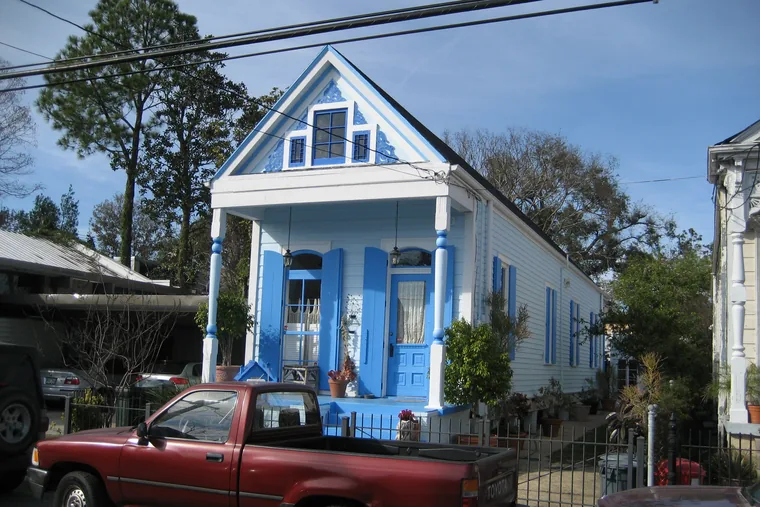
Bywater building stock, and what it means for a roof
Bywater is downriver of the Marigny and holds one of the best-preserved concentrations of nineteenth-century vernacular housing in the city — Creole cottages set right at the front property line with their characteristic steep pitch, single and double shotguns, and the side-gallery shotguns that are something of a local signature.
The roofs are small and simple in plan but steeper than most people expect, which changes the access and safety requirements more than the material cost. Much of the neighborhood sits inside the Bywater Historic District, so visible work carries HDLC exposure, and the riverfront edge along Crescent Park takes more direct wind than the blocks behind it.
Why Bywater roofs fail the way they do
Three things we see repeatedly on this stock — not a generic list, and not the same three as the next neighborhood over.
Steep-pitch fixing failure
A Creole cottage’s steep roof sheds water fast but puts constant load on fixings. Slipped courses start high and travel down.
Front-wall parapet junctions
Cottages built to the property line meet the street wall at an abrupt junction that has to be flashed correctly or it wicks.
Riverfront wind exposure
The blocks nearest Crescent Park take unobstructed wind off the river, and ridge and rake edges lift there first.
Tying new roof into old without causing a problem
Installation is not replacement. The roof has not failed — the building is changing. Different buyer, different risk, different sequence.
- Warranty continuity. Cutting new work into an existing membrane can void the warranty on the part you are keeping. That gets established before anything is opened up, not after.
- Elevation work. Raising a house above base flood elevation lifts it into faster wind. A specification that suited it at grade may not suit it eight feet up.
- Additions and pop-tops. New roof volume meeting an old roof creates junctions that did not exist before. Those tie-ins are where a new-build roof leaks first.
- Rooftop decks and galleries. Traffic-rated assemblies over occupied space are a different system from a roof nobody walks on, and the drainage has to be designed rather than assumed.
- Historic-district infill. New construction inside an HDLC or VCC district is reviewed on how it reads against its neighbors, roof included.
- GC sequencing. Dry-in timing drives everybody else on site. We schedule against the trades that follow us, not in isolation.
Replacement is a different job
If the roof you have has failed and you are replacing like for like, that is a replacement, and it runs differently — different survey, different cost drivers, different conversation about tear-off and decking. See roof replacement instead, and if you land on the wrong one, say so on the call and we will point you at the right one rather than quoting you for the wrong job.
A re-roofing permit is required in Orleans Parish — and three different commissions may review it
Residential re-roofing permits are applied for through the Department of Safety and Permits. Properties inside a historic district require additional review time before the permit is issued.
Four stages, no surprises
Inspection
Someone goes onto the roof. Not a drive-by, not a satellite image — the covering, the flashing, the valleys and the deck condition, looked at directly.
Diagnosis
What has failed and why, traced to the actual entry point rather than the spot where water shows up inside.
Written scope
What we found, what we propose, and what it costs, in writing with photographs. No number quoted cold over the phone.
The work
Carried out to the agreed scope, dried in each day, site cleared, and documented for your records and your insurer.
Working around Crescent Park, Bywater Historic District, St. Claude Avenue and the surrounding streets. If your address is in Bywater, it is in the service area — there is no travel surcharge anywhere inside Orleans Parish.
Roof Installation near Bywater
Everything else we do in Bywater
Roof Installation in Bywater — straight answers
We are working with an architect and a GC — can you coordinate?
That is the normal arrangement on installation work. Dry-in timing drives the trades that follow us, so we schedule against the program rather than in isolation, and we talk to whoever is running the job.
Will new work void the warranty on the existing roof?
It can, which is why it gets established before anything is opened up. Cutting new work into an existing membrane without checking the warranty terms is a common and expensive mistake on additions and rooftop decks.
We are elevating the house — does that change the roof?
It can change the specification. Raising a building above base flood elevation also lifts it into faster wind, and an assembly that was adequate at grade may need enhanced fixing once it is up. This matters most in Lakeview, Gentilly and the Lower Ninth.
Is my Bywater cottage in a historic district, and does that affect the roof?
Much of Bywater is inside a locally designated historic district under the HDLC, and if you are in it, work visible from the street carries a review requirement. A re-roofing permit is required from the Department of Safety and Permits regardless, and historic-district properties take additional review time before that permit is issued. We confirm your address’s status before committing to a start date.
Roof Installation in Bywater?
Call and we will get someone on the roof, then put what we find in writing.