Slate & Tile Roof Restoration in Bayou St. John, New Orleans
Raised center-hall houses and early cottages along the bayou ridge — the oldest high ground in the city, and some of its oldest surviving houses outside the Quarter.
- Bayou ridge — high ground
- Raised center-hall and cottage stock
- Pitot House and City Park edge
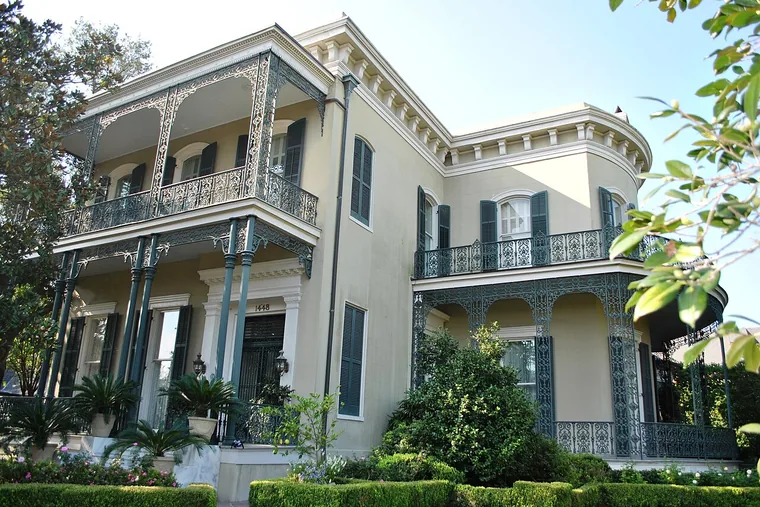
Bayou St. John building stock, and what it means for a roof
Bayou St. John follows the natural ridge along the bayou that was the original portage route into the city, which makes it some of the highest and oldest-settled ground in New Orleans. The Pitot House, built in 1799, still stands on the bayou. The stock ranges from surviving eighteenth-century Creole plantation-style houses through raised center-hall cottages to 1920s and 1930s infill.
The old houses here have the broad hipped roofs and deep galleries of the Creole colonial tradition, which are handsome and unusually demanding to roof — large hipped planes, gallery roofs at a shallower pitch tying into the main roof, and framing that predates any modern standard. The ridge position means drainage is rarely the problem; age and geometry are.
Why Bayou St. John roofs fail the way they do
Three things we see repeatedly on this stock — not a generic list, and not the same three as the next neighborhood over.
Gallery-to-main tie-ins
A shallow gallery roof meeting a steeper main roof is the defining detail of this stock and its most reliable leak.
Historic framing deflection
Hand-cut framing two centuries old sags between bearings. The covering follows it and opens along the low line.
Broad hip ridges
Large hipped roofs have long hip lines. Ridge and hip caps are exposed and are usually the first thing wind takes.
Keeping a historic roof rather than losing it
A slate or clay tile roof that is shedding units is usually not finished. It is usually telling you something specific, and the specific answer is cheaper than the general one.
- Establish what is actually failing. On most historic roofs the slate outlives the copper. Valleys, step flashing and gutter linings go first, and the symptom presents as a slate problem.
- Match rather than substitute. Replacement slates are matched on color, size and thickness; tile is sourced to profile. The HDLC and the VCC both treat a visible mismatch as a change to the building, not a repair to it.
- Check the fixings, not just the units. Nail fatigue is what makes a slate roof start dropping slates at random rather than in one area. That is a re-fixing job, not a re-roofing job.
- Respect the deck. Original plank decking under a century-old slate roof behaves differently from modern sheathing, and modern underlayment has to be specified to suit it.
- Document for review. Before-and-after photographs and a written material schedule are what a historic-district review actually wants to see.
What the commissions will not accept
Design guidance for the local historic districts is explicit that standing seam metal is typically not an appropriate material to replace asphalt, slate or asbestos roofing. Traditional slate and clay tile are supported for restoration, and modern substitutes are permitted only where they match in material and color. If a contractor proposes stripping your slate for metal because it is quicker, that is a review problem as well as a preservation one.
A re-roofing permit is required in Orleans Parish — and three different commissions may review it
Residential re-roofing permits are applied for through the Department of Safety and Permits. Properties inside a historic district require additional review time before the permit is issued.
Four stages, no surprises
Inspection
Someone goes onto the roof. Not a drive-by, not a satellite image — the covering, the flashing, the valleys and the deck condition, looked at directly.
Diagnosis
What has failed and why, traced to the actual entry point rather than the spot where water shows up inside.
Written scope
What we found, what we propose, and what it costs, in writing with photographs. No number quoted cold over the phone.
The work
Carried out to the agreed scope, dried in each day, site cleared, and documented for your records and your insurer.
Working around Pitot House, City Park, Bayou St. John and the surrounding streets. If your address is in Bayou St. John, it is in the service area — there is no travel surcharge anywhere inside Orleans Parish.
Slate & Tile Roof Restoration near Bayou St. John
Everything else we do in Bayou St. John
Slate & Tile Roof Restoration in Bayou St. John — straight answers
Can my slate roof be repaired rather than replaced?
Usually, yes. Slate is one of the few coverings where individual units genuinely can be replaced, and a roof dropping the occasional slate is more often telling you the fixings or the copper valleys are tired than that the slate itself is finished.
Can I put metal on instead? It is cheaper.
Not in a local historic district, in most cases. Design guidance is explicit that standing seam metal is typically not an appropriate replacement for asphalt, slate or asbestos roofing in these districts. Traditional slate and clay tile are supported for restoration, and substitutes have to match in material and color.
How do you match a slate or tile that is no longer made?
On color, size and thickness for slate, and on profile for tile, sourcing salvaged or matched stock rather than putting the nearest available item on the roof. A visible mismatch is treated by the HDLC and the VCC as a change to the building rather than a repair to it.
My house is older than the building code — can it take a modern roof?
Usually yes, but the framing has to be assessed first rather than assumed. Historic hand-cut framing was sized for the covering of its day, and swapping a light covering for a heavy one without checking is how you find out the hard way. On the older bayou houses we look at rafter size, spacing and condition before specifying anything, and sometimes the right answer is to stay with the lighter system.
Slate & Tile Roof Restoration in Bayou St. John?
Call and we will get someone on the roof, then put what we find in writing.