Slate & Tile Roof Restoration in East Carrollton, New Orleans
The old streetcar suburb at the river bend — 1890s to 1920s shotguns, doubles and bungalows on the higher ground of the natural levee. Mixed eras on the same block, so mixed roof systems too.
- Riverbend and streetcar corridor
- Mixed 1890s–1920s stock
- Higher natural-levee ground
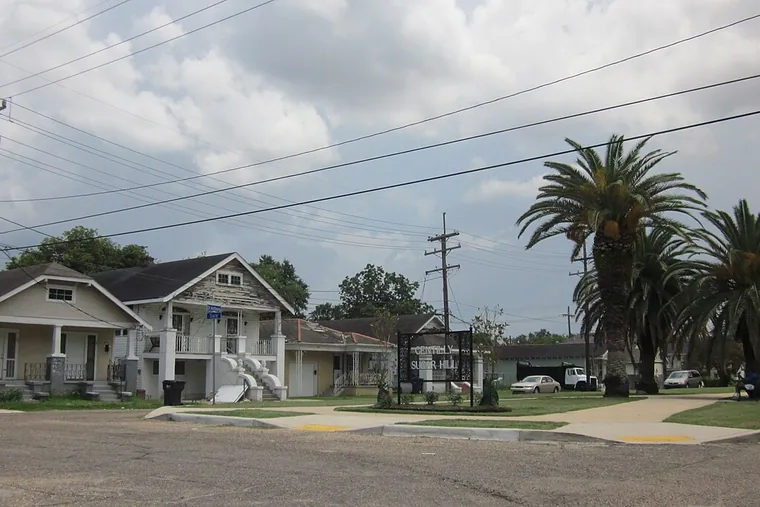
East Carrollton building stock, and what it means for a roof
Carrollton was its own town before New Orleans absorbed it, and East Carrollton still reads that way — a streetcar suburb that filled in from the 1890s through the 1920s where the river bends. The stock is genuinely mixed: shotguns and doubles alongside Craftsman bungalows and the occasional Victorian, often on the same block.
That mix means the roof systems vary more here than in neighborhoods built in a single push. A block can run from a simple gable shotgun with architectural shingle to a hipped bungalow with multiple valleys to a surviving slate roof, and each needs a different assessment. The compensation is the ground: this is natural-levee high ground, so the drainage problems that dominate Broadmoor and Lakeview are far less of a factor.
Why East Carrollton roofs fail the way they do
Three things we see repeatedly on this stock — not a generic list, and not the same three as the next neighborhood over.
Hip and valley junctions
Bungalow hipped roofs have more junctions than the shotguns beside them, and those junctions are where the failures concentrate.
Previous mixed materials
Mixed-era blocks attract mixed-era repairs. We find shingle patched onto slate and metal patched onto shingle regularly here.
Porch and gallery roofs
Low-slope porch roofs tied into a steeper main roof are a standard detail here and a standard leak.
Keeping a historic roof rather than losing it
A slate or clay tile roof that is shedding units is usually not finished. It is usually telling you something specific, and the specific answer is cheaper than the general one.
- Establish what is actually failing. On most historic roofs the slate outlives the copper. Valleys, step flashing and gutter linings go first, and the symptom presents as a slate problem.
- Match rather than substitute. Replacement slates are matched on color, size and thickness; tile is sourced to profile. The HDLC and the VCC both treat a visible mismatch as a change to the building, not a repair to it.
- Check the fixings, not just the units. Nail fatigue is what makes a slate roof start dropping slates at random rather than in one area. That is a re-fixing job, not a re-roofing job.
- Respect the deck. Original plank decking under a century-old slate roof behaves differently from modern sheathing, and modern underlayment has to be specified to suit it.
- Document for review. Before-and-after photographs and a written material schedule are what a historic-district review actually wants to see.
What the commissions will not accept
Design guidance for the local historic districts is explicit that standing seam metal is typically not an appropriate material to replace asphalt, slate or asbestos roofing. Traditional slate and clay tile are supported for restoration, and modern substitutes are permitted only where they match in material and color. If a contractor proposes stripping your slate for metal because it is quicker, that is a review problem as well as a preservation one.
A re-roofing permit is required in Orleans Parish — and three different commissions may review it
Residential re-roofing permits are applied for through the Department of Safety and Permits. Properties inside a historic district require additional review time before the permit is issued.
Four stages, no surprises
Inspection
Someone goes onto the roof. Not a drive-by, not a satellite image — the covering, the flashing, the valleys and the deck condition, looked at directly.
Diagnosis
What has failed and why, traced to the actual entry point rather than the spot where water shows up inside.
Written scope
What we found, what we propose, and what it costs, in writing with photographs. No number quoted cold over the phone.
The work
Carried out to the agreed scope, dried in each day, site cleared, and documented for your records and your insurer.
Working around Riverbend, Oak Street, St. Charles Avenue streetcar terminus and the surrounding streets. If your address is in East Carrollton, it is in the service area — there is no travel surcharge anywhere inside Orleans Parish.
Slate & Tile Roof Restoration near East Carrollton
Everything else we do in East Carrollton
Slate & Tile Roof Restoration in East Carrollton — straight answers
Can my slate roof be repaired rather than replaced?
Usually, yes. Slate is one of the few coverings where individual units genuinely can be replaced, and a roof dropping the occasional slate is more often telling you the fixings or the copper valleys are tired than that the slate itself is finished.
Can I put metal on instead? It is cheaper.
Not in a local historic district, in most cases. Design guidance is explicit that standing seam metal is typically not an appropriate replacement for asphalt, slate or asbestos roofing in these districts. Traditional slate and clay tile are supported for restoration, and substitutes have to match in material and color.
How do you match a slate or tile that is no longer made?
On color, size and thickness for slate, and on profile for tile, sourcing salvaged or matched stock rather than putting the nearest available item on the roof. A visible mismatch is treated by the HDLC and the VCC as a change to the building rather than a repair to it.
My block has houses from three different eras — does that change the job?
It changes the assessment, not the standard. A hipped bungalow, a gable shotgun and a slate Victorian all need different things, and quoting them from one template is how corners get cut. We look at what is actually on your roof and what is under it before pricing, which on a mixed block like this is the only sensible approach.
Slate & Tile Roof Restoration in East Carrollton?
Call and we will get someone on the roof, then put what we find in writing.