Storm Damage Roof Repair in East Carrollton, New Orleans
The old streetcar suburb at the river bend — 1890s to 1920s shotguns, doubles and bungalows on the higher ground of the natural levee. Mixed eras on the same block, so mixed roof systems too.
- Riverbend and streetcar corridor
- Mixed 1890s–1920s stock
- Higher natural-levee ground
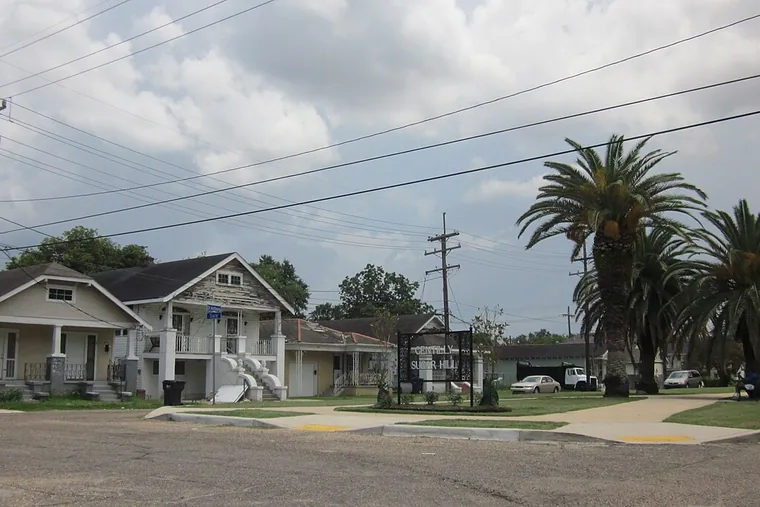
East Carrollton building stock, and what it means for a roof
Carrollton was its own town before New Orleans absorbed it, and East Carrollton still reads that way — a streetcar suburb that filled in from the 1890s through the 1920s where the river bends. The stock is genuinely mixed: shotguns and doubles alongside Craftsman bungalows and the occasional Victorian, often on the same block.
That mix means the roof systems vary more here than in neighborhoods built in a single push. A block can run from a simple gable shotgun with architectural shingle to a hipped bungalow with multiple valleys to a surviving slate roof, and each needs a different assessment. The compensation is the ground: this is natural-levee high ground, so the drainage problems that dominate Broadmoor and Lakeview are far less of a factor.
Why East Carrollton roofs fail the way they do
Three things we see repeatedly on this stock — not a generic list, and not the same three as the next neighborhood over.
Hip and valley junctions
Bungalow hipped roofs have more junctions than the shotguns beside them, and those junctions are where the failures concentrate.
Previous mixed materials
Mixed-era blocks attract mixed-era repairs. We find shingle patched onto slate and metal patched onto shingle regularly here.
Porch and gallery roofs
Low-slope porch roofs tied into a steeper main roof are a standard detail here and a standard leak.
What hurricane damage actually looks like
Gulf Coast storm damage is a wind-uplift story. Most of it is invisible from the street, which is exactly why claims get underpaid.
Lifted but not missing
Wind breaks the seal strip and lifts a shingle without taking it away. It lies back down looking normal and lets water under from then on.
Ridge and rake loss
Uplift starts at the edges. Ridge caps and rake courses go first, and they are the hardest lines to see from ground level.
Displaced slate and tile
On historic roofs wind slips units rather than removing them. A handful of moved slates opens the underlayment to driven rain.
Flashing pulled open
Chimney, wall and valley flashing works loose under sustained wind load and stays open afterwards.
Debris strike
Live oak limbs are the usual culprit here. A strike can fracture decking without leaving an obvious hole in the covering.
Wind-driven rain intrusion
Water forced horizontally under courses and into vents, with no covering damage visible at all afterwards.
How the claim runs
- Inspect and document. Photographs of every damaged element, dated, with the damage mechanism described in writing.
- You file. The claim is yours to file — we give you the documentation to file it with.
- Adjuster meeting. We meet your adjuster on the roof and walk them through what we found, so the scope is agreed on the roof rather than argued afterwards.
- Repair and close out. The approved scope is carried out and documented for the file.
What we cannot do for you
We are not your insurer and we are not public adjusters. We cannot promise a claim outcome, tell you your policy covers something, or negotiate on your behalf. What we can do is document what the storm did, accurately and thoroughly, so the decision is made on evidence. Anyone promising you a guaranteed approval before they have been on the roof is telling you what you want to hear.
The season, and what it asks of a roof
Gulf Coast roof failure is a wind story, not a hail story. The damage that matters is uplift — seals broken, edges lifted, water driven under what is left.
The window for finding lifted edges, tired flashing and loose ridge caps while there is still time to fix them calmly and at a normal price.
Peak season. Demand spikes, good crews book out, and the roofs that get attention first are the ones already on somebody’s list.
Nobody credible puts a crew on a roof while it is still blowing. We take the call, log the address, and move the moment conditions allow.
Make safe, dry in, document for the claim, then diagnose properly in daylight. In that order, and not all in one visit.
Four stages, no surprises
Inspection
Someone goes onto the roof. Not a drive-by, not a satellite image — the covering, the flashing, the valleys and the deck condition, looked at directly.
Diagnosis
What has failed and why, traced to the actual entry point rather than the spot where water shows up inside.
Written scope
What we found, what we propose, and what it costs, in writing with photographs. No number quoted cold over the phone.
The work
Carried out to the agreed scope, dried in each day, site cleared, and documented for your records and your insurer.
Working around Riverbend, Oak Street, St. Charles Avenue streetcar terminus and the surrounding streets. If your address is in East Carrollton, it is in the service area — there is no travel surcharge anywhere inside Orleans Parish.
Storm Damage Roof Repair near East Carrollton
Everything else we do in East Carrollton
Storm Damage Roof Repair in East Carrollton — straight answers
Can you guarantee my insurance claim gets approved?
No, and anyone who does is telling you what you want to hear. We are not your insurer and we are not public adjusters. What we do is document what the storm actually did, thoroughly and with dated photographs, so the decision gets made on evidence rather than on a guess.
My roof looks fine from the street — can there still be storm damage?
Frequently, yes. Gulf Coast wind damage is mostly uplift: seals broken and shingles lifted then laid back down, ridge and rake courses started, flashing pulled open. Almost none of that is visible from ground level, which is exactly why this damage gets missed and claims get underpaid.
How soon after a storm should I have it looked at?
As soon as it is safe. Documentation is strongest close to the event, and an opening that is left through the next rain turns a roof claim into a roof-and-interior claim.
My block has houses from three different eras — does that change the job?
It changes the assessment, not the standard. A hipped bungalow, a gable shotgun and a slate Victorian all need different things, and quoting them from one template is how corners get cut. We look at what is actually on your roof and what is under it before pricing, which on a mixed block like this is the only sensible approach.
Storm Damage Roof Repair in East Carrollton?
Call and we will get someone on the roof, then put what we find in writing.